Publication
Asian Journal of Civil Engineering
26(6), 2319–2330.
Research / Publications
M.Des Sustainable Design research on facade optimisation, environmental simulation and computational decision-making. The record includes a published literature review and a submitted hotel-restaurant study.
Paper 01 / Published
A bibliometric review of sustainable-architecture optimisation research, using Scopus records from 2000–2024 and VOSviewer mapping to identify publication trends, thematic clusters and gaps.
Asian Journal of Civil Engineering
26(6), 2319–2330.
1,732 records identified
1,598 unique records after filtering and duplicate removal.
Dynamic shading and life-cycle assessment were comparatively underrepresented in the reviewed optimisation literature.
Paper 02 / Submitted manuscript
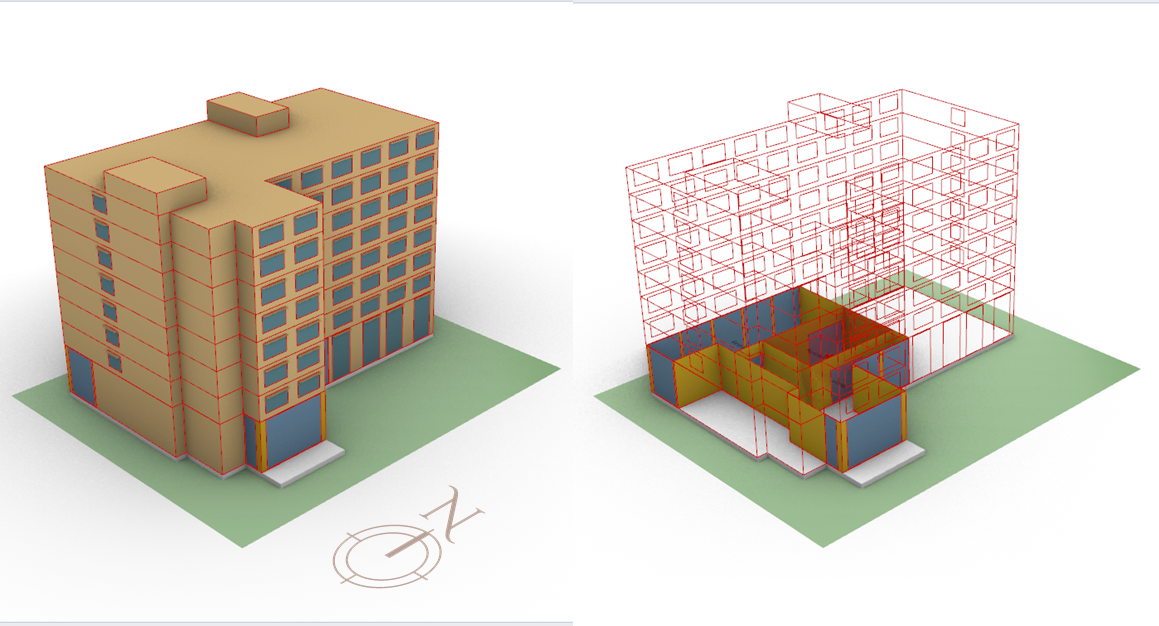
A comparative simulation study of combined static-fin geometry and glazing parameters for cooling and annual daylight in a three-sided glazed hotel restaurant in Bilaspur.
470 m² hotel restaurant zone
Three glazed sides in Bilaspur, Chhattisgarh.
NSGA-II optimisation
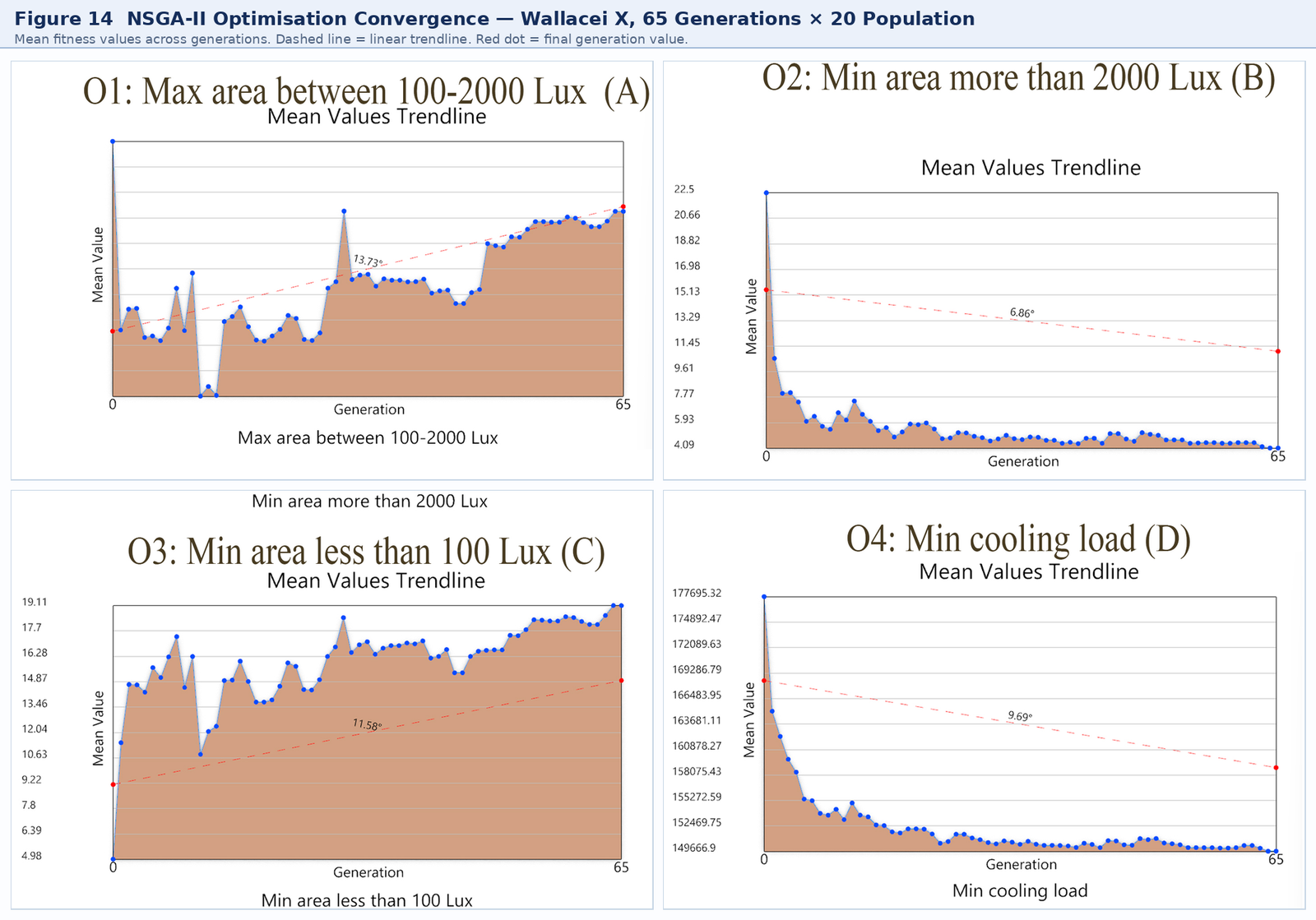
Four active objectives: useful daylight, underlit area, overlit area and cooling load.
Submitted to Next Energy, Elsevier.
Manuscript record NXENER-D-26-00590.
Method record
The study compares fin-and-glazing configurations for annual cooling and daylight in a 470 m² hotel restaurant in Bilaspur.
DefineBilaspur climate, hotel zone, glazing and fin ranges.
Simulateannual cooling and climate-based daylight with a consistent model.
Searchthe coupled design space with NSGA-II in Wallacei X.
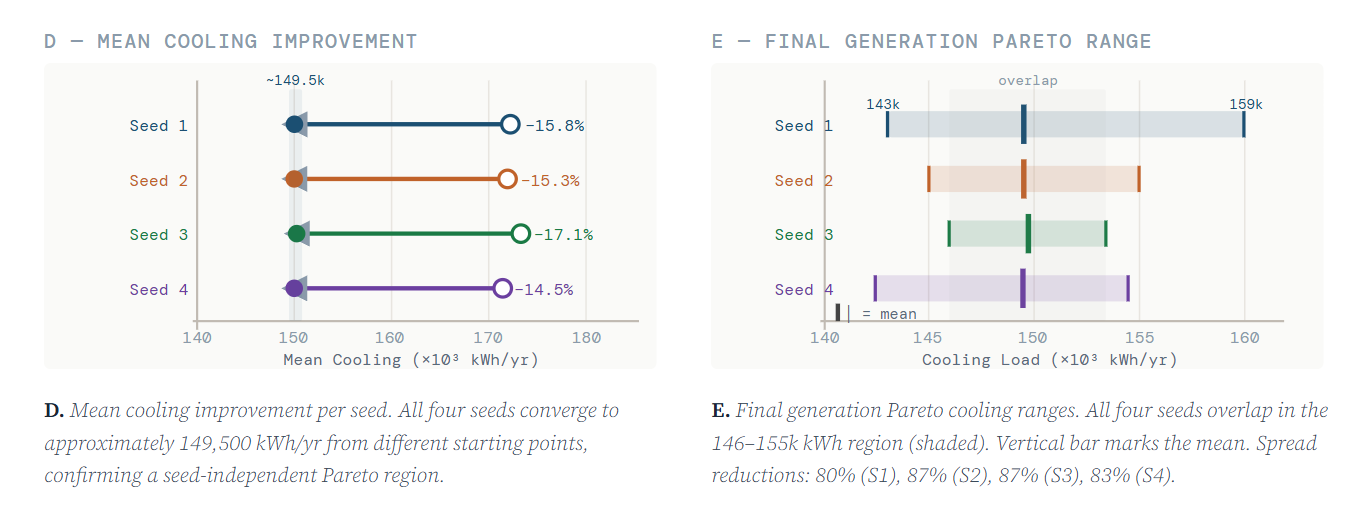
Reviewthe Pareto set and compare recorded outcomes across seeds.
SUBMITTED MANUSCRIPT · SELECTED FIGURES